
Why Your Identity System Needs a Backup and Recovery Strategy
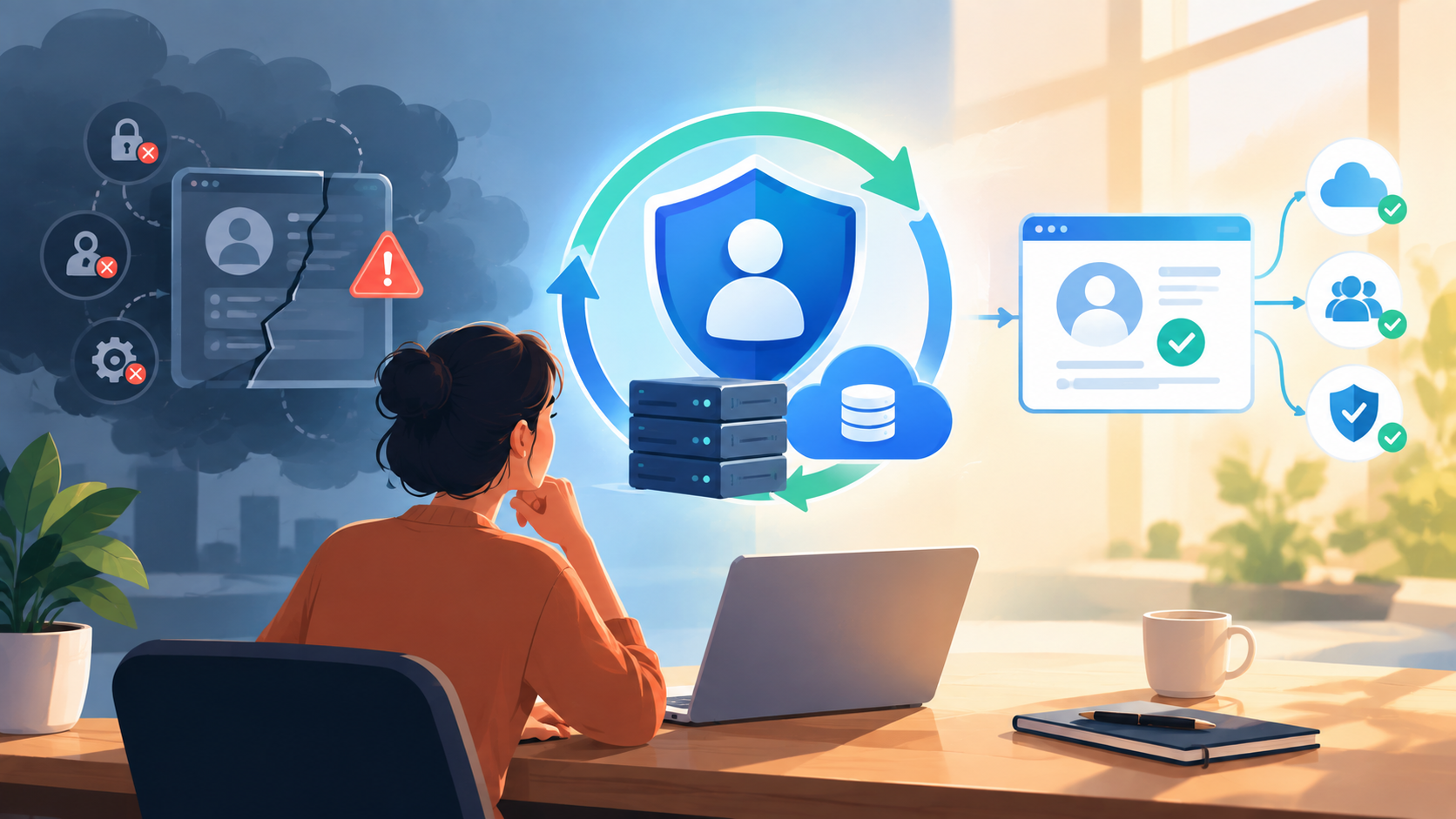
Identity has become the foundation of modern business. Employees use their identities to access cloud applications, files, collaboration platforms, business systems, and sensitive data. When identity services are disrupted, the impact can extend far beyond being unable to log in.
That is why organizations should consider identity backup and recovery an essential part of their cybersecurity strategy.
Many businesses have mature backup processes for servers, databases, and business applications, but identity environments are often treated differently. Organizations may assume that because their identity platform is cloud-based, recovery is automatically handled. While cloud providers maintain the underlying infrastructure, organizations are still responsible for protecting their configurations, users, groups, permissions, and other identity-related data.
Accidental deletion is one example. An administrator could unintentionally remove a user, modify a group, or change an important configuration. More serious scenarios can involve compromised administrative accounts, where an attacker deliberately changes permissions, deletes accounts, or alters configurations to disrupt operations or maintain access.
The consequences can be significant. If employees cannot access critical applications, productivity can come to a halt. Restoring a complex identity environment manually can also take considerable time, particularly when an incident affects numerous users, groups, roles, or configurations.
A strong identity recovery strategy starts with understanding what needs to be protected. Organizations should identify critical identity objects and configurations and determine how quickly they would need to be restored following an incident.
Regular backups can provide recovery points that allow organizations to restore identity information rather than rebuilding everything from scratch. Backup data should also be protected from unauthorized access and, where possible, isolated from the production environment. This can help reduce the risk of an attacker compromising both the production environment and its recovery resources.
Recovery testing is equally important. Having backups does not guarantee a successful recovery. Organizations should periodically verify that backup data is usable and that administrators understand the steps required to restore critical identity components.
Identity security should ultimately extend beyond prevention. Strong authentication, least-privilege access, privileged account protection, and continuous monitoring can help prevent identity incidents. Backup and recovery provide another layer of resilience when those controls are bypassed or mistakes occur.
As organizations become increasingly dependent on cloud identities, protecting the ability to recover those identities is no longer simply an IT consideration. It is a business continuity requirement.
How CyberGrade Can Help
We specialize in helping organizations navigate the complexities of remote work security. Our vendor-agnostic approach allows us to assess your unique needs and recommend tailored solutions to mitigate cybersecurity risks effectively.